Publication · May 24, 2024
Jorge Hidalgo launches the book “Comunicación Responsable”
The lab's director presented a communication model built on five traits: honesty, empathy, interactivity, congruence and transparency.
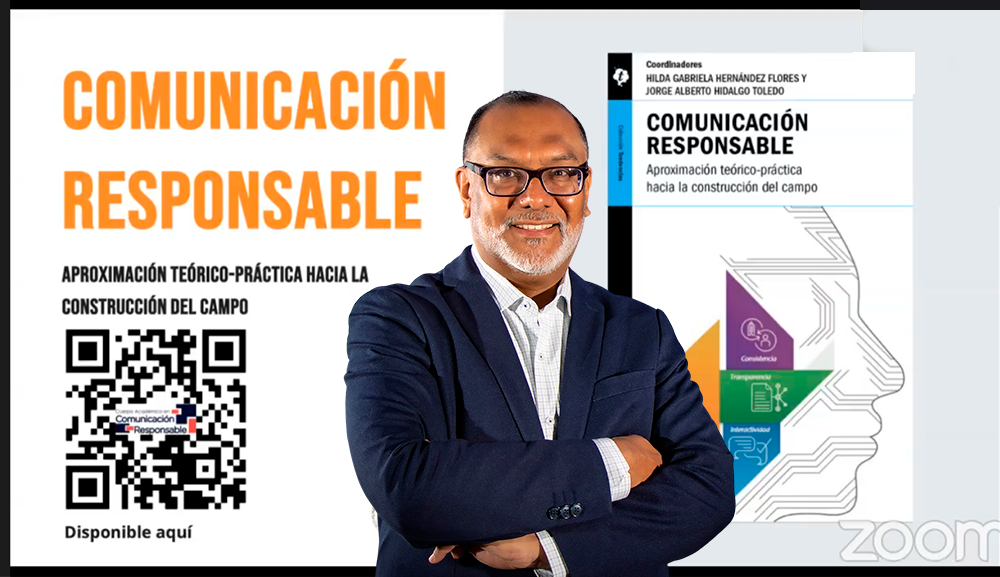
On May 24, 2024, Dr. Jorge Alberto Hidalgo Toledo, director of the Human & Nonhuman Communication Lab, launched the book “Comunicación Responsable: aproximación teórico-práctica hacia la construcción del campo” (Responsible Communication: a theoretical and practical approach to building the field), a model that rethinks how companies, media and individuals should communicate.
Context
The model was created in 2019 and has been refined through what was learned in practice. The book has a foreword by Dr. Sandra Massoni, professor of strategic communication, consultant, researcher and graduate lecturer at several universities.
What it proposes
At the launch, the author defined responsible communication as an honest and congruent interaction resting on five traits: honesty, empathy, interactivity, congruence and transparency.
“They are essential to build a solid communicative reputation in a changing and complex environment.”
The model can be applied to the specialized subfields of communication, enabling case studies and offering a holistic approach for practical use.
What the book contains
The book includes community-based and ethical guides and work agendas, designed to be applied as a whole and able to be assessed. Its chapters cover reflections toward an anthropology of digital communication, educational processes and responsible communication in government, politics, advertising and marketing.
The approach seeks to improve the relationship between the different actors who communicate and to adapt to a dynamic environment, so that communication practices stay ethical and effective over the long term.
Why it matters for the lab
The question of trust and reputation when communication increasingly runs through platforms and automated systems is central to the line Digital culture, trust and power. The model gives the lab its own foundation, with assessable tools, for its work with organizations and media.